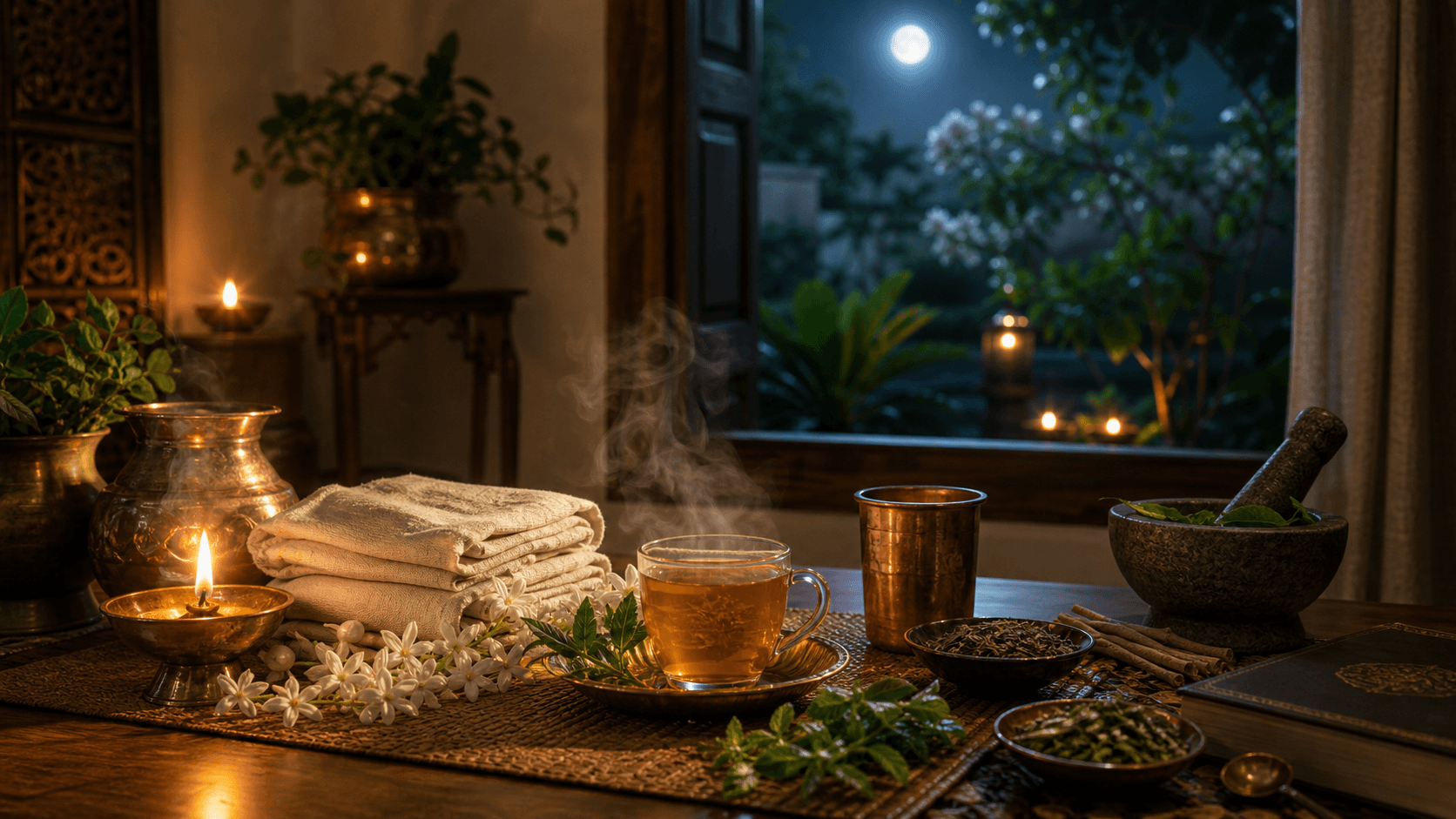
A Calm Evening Rhythm, Not a Guarantee
An Ayurveda-inspired evening wind-down works best when it is treated as a steady rhythm, not as a promise that sleep will arrive on command. In classical Ayurveda, the end of the day is a time to reduce stimulation, simplify food, settle the senses, and make the body feel safe enough to rest. Modern sleep guidance points in a similar practical direction: keep a consistent schedule, create a relaxing bedtime routine, and reduce bright evening light.
This guide is educational wellness content. It is not personal healthcare advice and should not replace guidance from a qualified professional when sleep concerns are ongoing, intense, or affecting daily life.
The Three Anchors
The first anchor is timing. Choose a realistic wind-down window, even if it is only 20 minutes. Start at roughly the same time most nights. A predictable cue helps separate the workday from the resting part of the day. The cue can be as simple as dimming lights, putting the phone away from the bed, or washing the feet with warm water.
The second anchor is warmth. Ayurveda often uses gentle warmth as a symbol of grounding and comfort: warm water, a warm bath, a clean cotton towel, or a small cup of caffeine-free herbal infusion if it suits you. Keep this ordinary and food-based. Avoid strong claims, concentrated extracts, or stacking multiple products, especially if you already follow professional care guidance.
The third anchor is lightness. Heavy late meals, intense work, arguments, and rapid scrolling can all keep the mind active. A lighter evening does not mean rigid restriction. It means giving digestion, attention, and the nervous system fewer jobs at once.
A 20-Minute Practice
Begin by closing the kitchen and workspace for the night. If you need a reminder list for tomorrow, write three lines and stop. This prevents the bed from becoming a planning desk.
Next, shift the room. Lower bright lights, reduce loud audio, and keep screens away from the pillow area. If you must use a device, use it intentionally rather than drifting through feeds.
Then add one tactile cue: warm water for the feet, a brief shower, clean night clothes, or a few slow breaths while seated. The goal is not a dramatic ritual. The goal is repetition. A small cue repeated nightly becomes easier to trust than a complicated routine done once a week.
Finally, keep product boundaries clear. Ayurveda-inspired lifestyle practices can sit beside modern sleep hygiene, but they should stay simple and low-risk. Be especially careful with imported or unlabeled Ayurvedic products; authoritative safety sources warn that some preparations may contain heavy metals or may not be suitable for every person.
How to Personalize It Safely
If your evenings are busy, protect the smallest version: same cue, same place, same order. If you travel, keep the cue portable: warm water, dim light, and a consistent wake time. If you live with family, make the routine quiet rather than perfect. Consistency matters more than aesthetics.
A responsible Ayurveda evening rhythm is not about forcing sleep. It is about removing avoidable friction: excess light, late intensity, uncertain timing, and unsafe product claims. Over time, that simplicity can make bedtime feel less like a task and more like a familiar return.