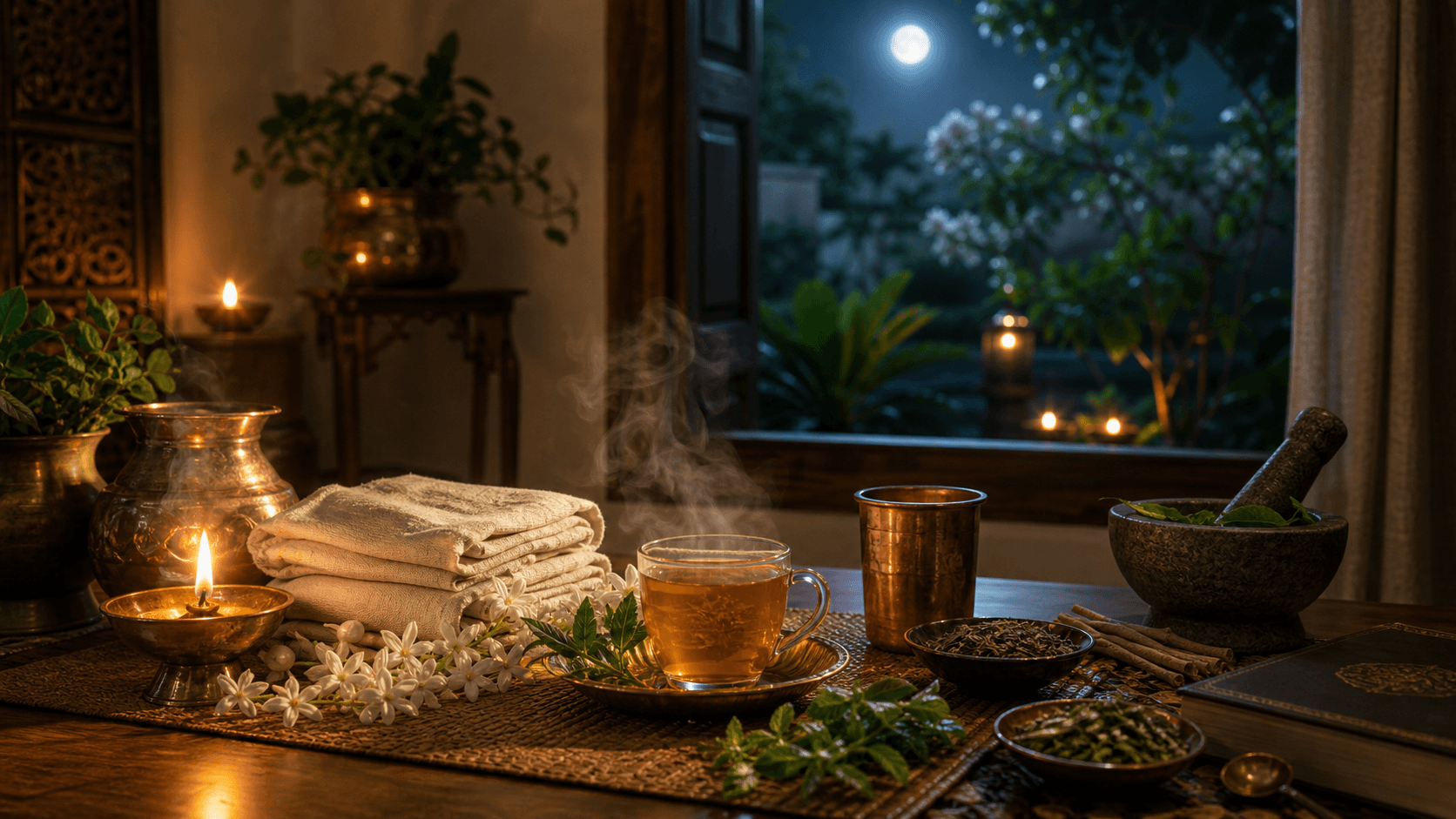
Ayurveda often frames daily wellness through dinacharya, the idea that small repeated habits shape how the body and mind meet the day. In a modern schedule, one of the most practical evening habits is not an exotic remedy. It is learning when stimulation belongs in the day and when the evening needs a softer rhythm.
This article is educational lifestyle awareness and does not replace personal guidance from a qualified professional. If your rest pattern is causing concern, affecting daytime safety, or changing suddenly, use this article as general context and seek appropriate support.
Why caffeine timing deserves attention
Caffeine is familiar, legal, and widely used, so it can feel harmless. The FDA notes that many healthy adults can tolerate up to about 400 mg per day, but sensitivity varies. Some people feel alert from a small afternoon tea; others process caffeine slowly because of personal biology, age, pregnancy status, medicines, or total daily intake.
From a sleep-hygiene perspective, the CDC recommends avoiding caffeine in the afternoon or evening. A cautious Ayurveda-inspired rhythm can translate that into a simple awareness practice: let energizing inputs belong earlier in the day, and let the last part of the day become lighter, quieter, and more predictable.
A practical evening rhythm
Start with your real bedtime, not an ideal one. Count backward and choose one caffeine boundary you can repeat for two weeks. For many people, that means keeping coffee, strong tea, cola, energy drinks, pre-workout powders, and caffeinated chocolate earlier in the day. If you are sensitive, your cutoff may need to be earlier than a friend’s.
Next, make the evening drink simple. Plain warm water, a small cup of non-caffeinated familiar infusion, or simply no drink close to bed may be enough. Avoid turning the ritual into a supplement stack. Concentrated herb products and proprietary night blends can be unsuitable for some people or interact with medicines, so personal professional guidance matters.
A calm evening also supports digestive comfort. Heavy meals, alcohol, and large amounts of liquid close to bedtime can disturb rest for some people. Ayurveda traditionally pays attention to digestive ease, and modern sleep guidance also recommends avoiding large meals before bed. The overlap is practical: choose a dinner that feels steady, keep the late evening light, and notice how your body responds.
What to track without obsessing
Use a simple three-line note for seven nights: last caffeine time, dinner timing, and how rested you felt on waking. Do not use the note to judge yourself. Use it to see patterns. If late caffeine repeatedly pairs with a restless night, that is useful information. If your rest still feels poor despite consistent habits, that is also useful because it points toward getting personal guidance rather than endlessly self-experimenting.
Safety boundaries
Ayurveda-inspired lifestyle awareness is lowest risk when it stays with ordinary routines: timing, moderation, gentle light, quiet, familiar food, and self-observation. It becomes higher risk when it makes big promises, replaces professional care, or depends on concentrated products. NCCIH and FDA safety information both caution that some Ayurvedic products may contain unsafe contaminants or be marketed with inappropriate health promises. Choose food-level habits first, and discuss supplement use with a professional who knows your personal context.
A caffeine-aware evening rhythm is not about perfection. It is a respectful boundary: stimulation earlier, steadiness later, and enough humility to seek help when a routine is not enough.