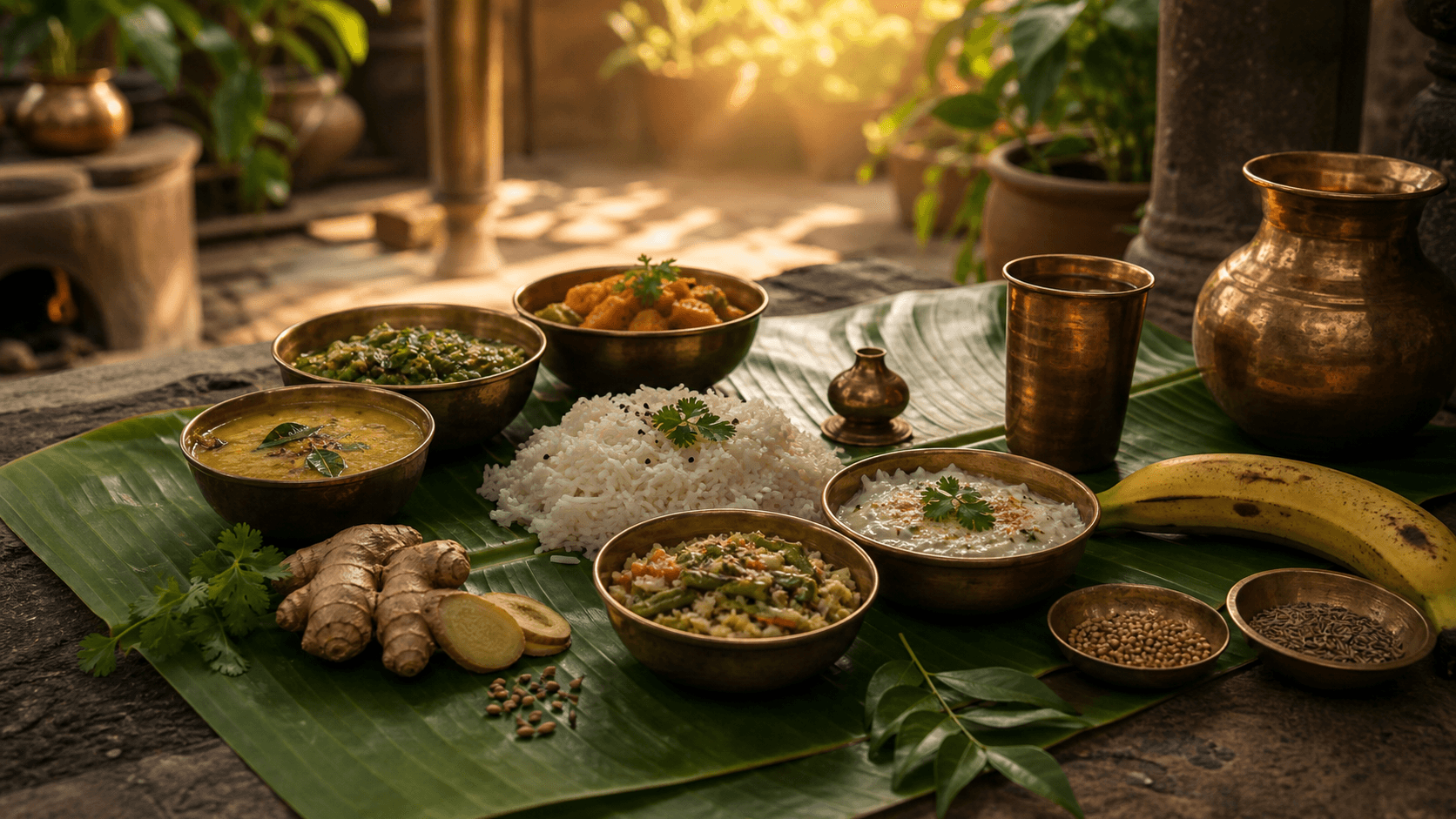
A kitchen spice box can make daily food warmer, brighter, and more satisfying. In Ayurveda, spices are traditionally discussed through ideas such as rasa, guna, virya, and how food feels in a person’s routine. For a modern reader, the safest starting point is simpler: use familiar culinary spices as part of normal cooking, avoid turning every spice into a “quick fix,” and treat concentrated products with the same care you would give any supplement.
What “spice literacy” means
Spice literacy is the habit of asking three questions before adding more of anything: What is the form? What is the amount? Who is using it? A pinch of cumin in dal is not the same exposure as capsules taken daily. Fresh ginger in tea is different from a high-dose extract. Turmeric in food is different from a concentrated curcumin supplement that may interact with medicines or be unsuitable for some people.
This distinction matters because many Ayurveda conversations blur food, wellness rituals, and medical treatment. Nirogidhara’s practical position is food-first: enjoy spices for flavour, cooking rhythm, and cultural continuity. For symptoms, chronic conditions, pregnancy, children, older adults, liver or kidney concerns, or regular medicines, speak with a qualified clinician before using herbal products or concentrated preparations.
A calm way to use common spices
Start with normal food amounts. Use one or two spices in a dish rather than stacking many new ingredients at once. Notice digestion, appetite, sleep, and comfort over several meals. If a spice reliably feels harsh, reduce it or skip it. Ayurveda values individual suitability, but suitability should be observed carefully, not guessed from social media lists.
Good everyday examples include cumin in lentils, coriander in vegetable dishes, fennel after meals for taste, ginger in small culinary amounts, and turmeric as a colour and flavour base. None of these should be presented as certain treatment. Their best role in an awareness article is modest: they can support a mindful cooking routine when used as food.
When caution is more important than enthusiasm
Be cautious with pills, powders bought online, imported products without clear testing, products claiming fast promises medical results, and preparations that include metals, minerals, or unclear ingredients. NCCIH and FDA safety pages warn that some Ayurvedic products have been associated with heavy metals or contamination. WHO’s Ayurveda practice benchmark also places safety, quality, trained practice, and adverse-event awareness at the centre of responsible use.
Also be careful with “more is better” advice. More spice can irritate the stomach, worsen reflux in some people, interact with medicines, or create false confidence that delays appropriate care. Ayurveda awareness should make daily life more attentive, not replace diagnosis, emergency care, prescribed treatment, or professional guidance.
A five-point home checklist
- Keep spices in food amounts unless a qualified professional advises otherwise.
- Add only one new spice habit at a time so you can notice your response.
- Check labels, expiry dates, testing claims, and ingredient lists on packaged products.
- Avoid products that promise promises medical results, detox miracles, or certain results.
- Discuss herbal supplements with a clinician if you take medicines or have a health condition.
Used this way, Ayurvedic spice literacy is not dramatic. It is a practical skill: cook thoughtfully, observe honestly, buy carefully, and keep medical decisions in the right hands.