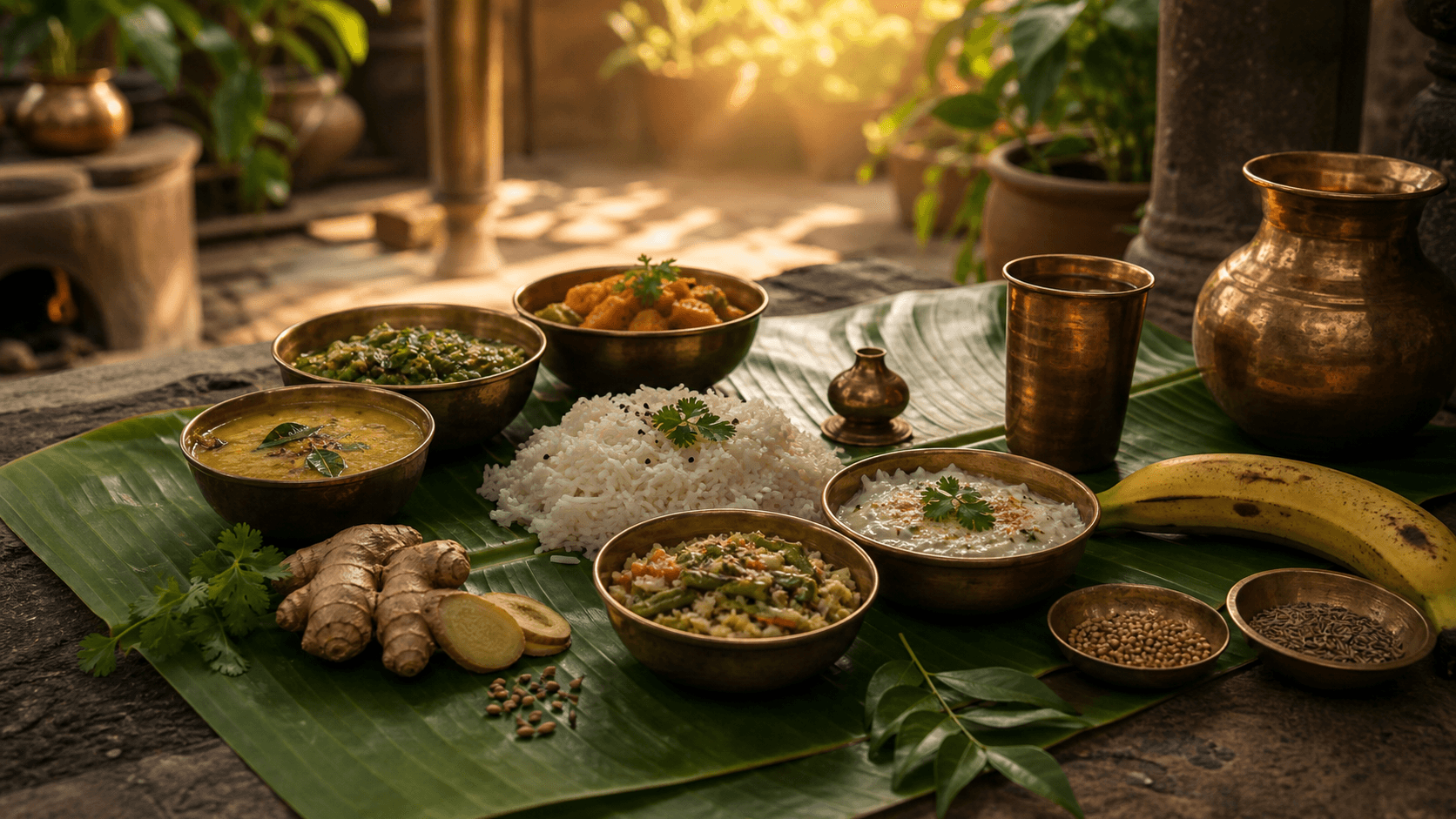
Ayurvedic Lunch Rhythm: A Calm Midday Practice for Digestion Awareness
In Ayurveda, food is not viewed only as calories or ingredients. It is part of a daily rhythm: when we eat, how settled we are, how much attention we bring to the meal, and how gently we return to activity afterward. A practical midday lunch rhythm can help people build awareness around appetite, heaviness, energy, and comfort without turning lunch into a rigid rulebook.
This article is general education, not personal health advice. It does not promise specific results or ask anyone to replace professional guidance. If a food habit regularly feels unsuitable for you, speak with a qualified health professional before making major changes or using herbs.
Why lunch deserves attention
Many traditional Ayurveda teachings give importance to the middle of the day, when daily activity and appetite are often strongest. A modern, responsible interpretation is simple: lunch should be planned rather than accidental. A rushed meal at a desk, eaten while scrolling or answering messages, can make it harder to notice fullness and food tolerance. Research on mindful eating also supports slowing down, reducing distraction, and paying attention to internal cues.
A calm lunch rhythm does not require exotic foods. It can begin with warm, freshly prepared food when possible, moderate portions, a comfortable seated posture, and enough time to eat without racing. The goal is to create a repeatable routine that supports awareness.
A practical 20-minute lunch sequence
Start with a pause. Before eating, take a few normal breaths and notice whether you are truly hungry, mildly hungry, or eating only because the clock says so. This helps separate appetite from stress or habit.
Eat seated, with fewer distractions. Keep the phone away for the first several minutes. Notice aroma, warmth, texture, and pace. Chew comfortably rather than mechanically. If your meal includes grains, vegetables, dal, soup, or other familiar foods, observe which combinations leave you light and steady.
Use fluids thoughtfully. Many people do well with small sips of warm or room-temperature water during a meal rather than large amounts taken quickly. This is a gentle awareness practice, not a universal prescription.
Finish with a quiet transition. Instead of jumping immediately into intense work, allow a few minutes of calm. A short, easy walk after lunch may help some people feel more settled, but it should feel comfortable, not like exercise training.
Keep the practice grounded
Avoid using Ayurveda awareness as a reason to ignore your body. If discomfort is strong, repeated, or worrying, get appropriate professional guidance. Also be cautious with Ayurvedic powders, tablets, and supplements bought online. Authorities such as NCCIH and FDA warn that some products may contain unsafe heavy metals or be marketed with inappropriate health promises.
The takeaway
An Ayurvedic lunch rhythm is best understood as a steady awareness practice: eat at a reasonable time, sit down, slow the pace, choose simple foods, sip gently, and return to the day with a calm transition. Over time, this helps you learn what feels supportive for your own body while staying within safe, evidence-aware boundaries.